A New Ballgame for Legacy Sports Venues
By Evan Hammersmith and Kris Peterson and Dave Woytek | Jun 11, 2026
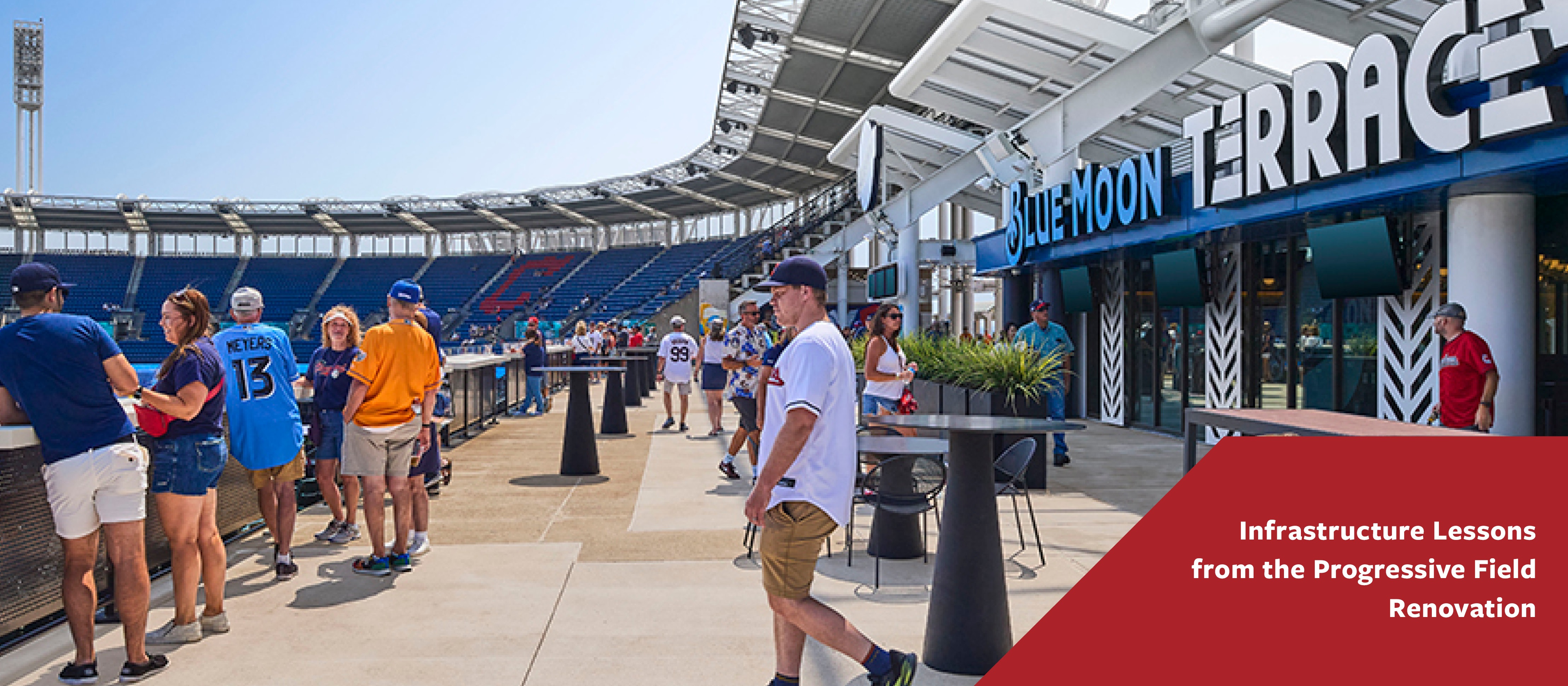
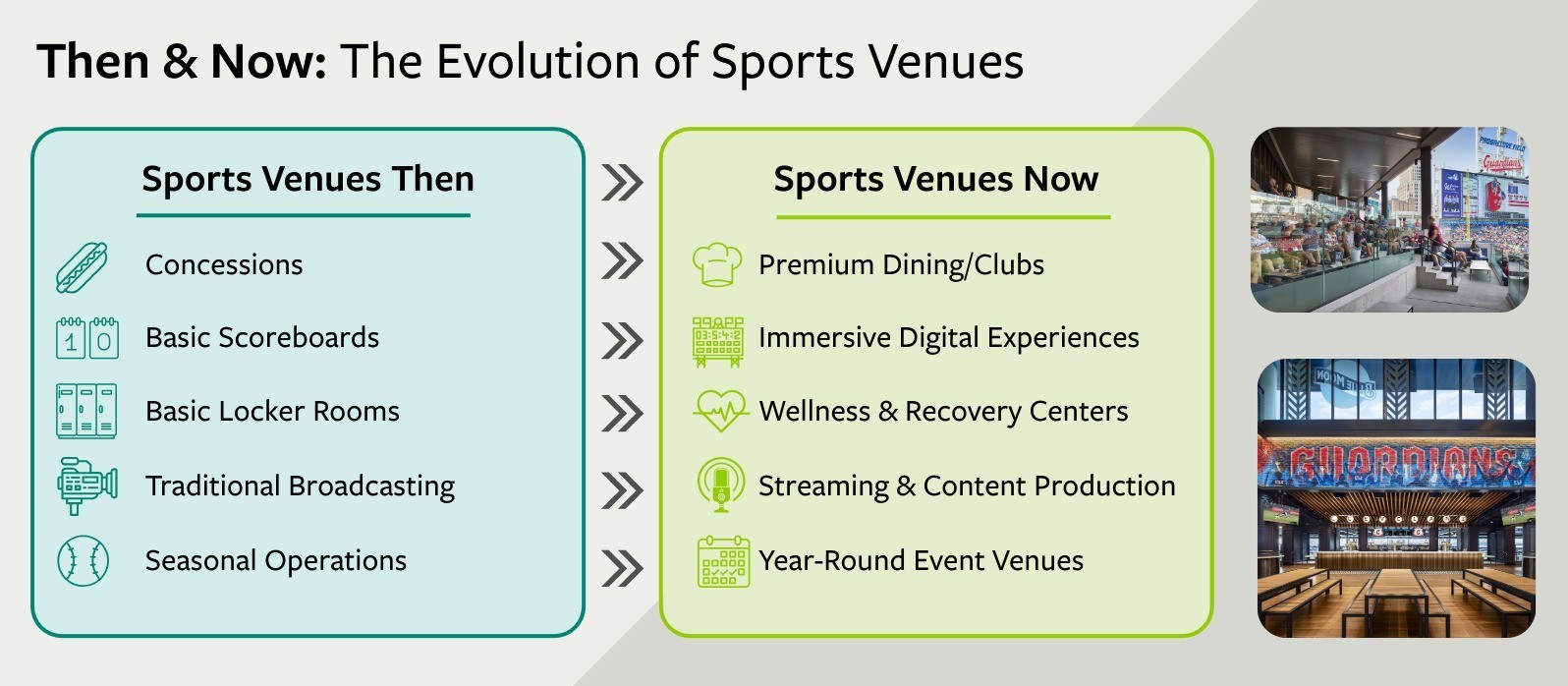
Sports venues are evolving faster than ever. Facilities that were once spaces for fans to watch games have evolved into entertainment destinations expected to deliver immersive fan experiences, premium hospitality, advanced technology integration, and year-round flexibility.
For architects, owners, and developers, this evolution presents a significant challenge: how do you modernize aging stadium infrastructure to support contemporary expectations without sacrificing the character, operational continuity, or long-term value of the venue itself?
The recent modernization of Progressive Field demonstrates how thoughtful engineering and multidisciplinary collaboration can transform a legacy ballpark into a modern destination without sacrificing its historic identity.
Why Modern Ballparks Need More Than a Facelift
Like many stadiums built in the 1990s and 2000s, Progressive Field faced mounting operational and infrastructure challenges. While previous renovations enhanced fan spaces and hospitality areas, much of the core infrastructure remained outdated. Player facilities no longer met modern expectations, administrative areas were overcrowded, and portions of the ballpark were underutilized.
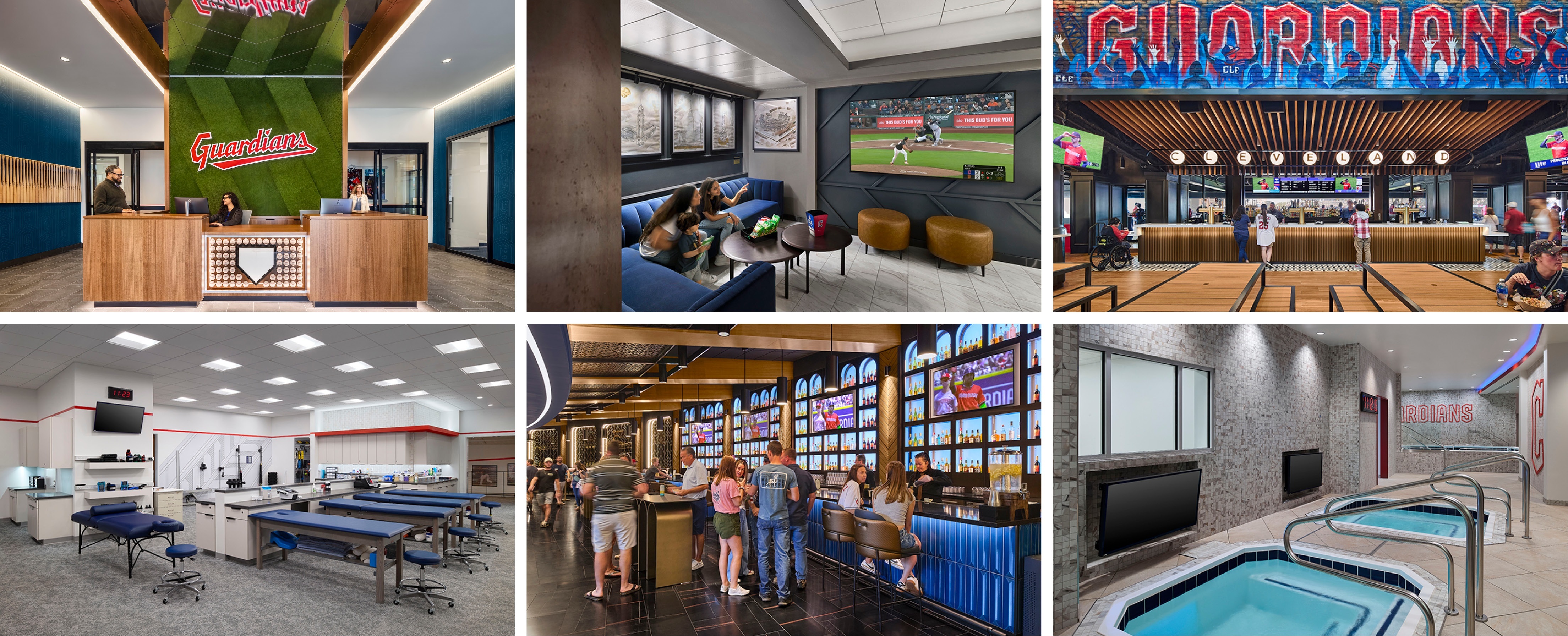
The Cleveland Guardians pursued a phased modernization strategy focused on extending the life of the facility while improving performance, flexibility, and user experience. The renovations introduced upgraded clubhouses, expanded hospitality spaces, and enhanced food service operations supported by major upgrades to the ballpark’s mechanical, electrical, plumbing, HVAC, technology, and fire protection systems.
That decision reflects a larger shift occurring throughout the sports and entertainment industry. Owners are increasingly recognizing that adaptive reuse and infrastructure modernization can provide greater long-term value than demolition and new construction, particularly when projects are approached strategically and collaboratively.
Behind Home Plate: Engineering Systems Take Center Field
As ballparks and sports venues evolve, MEP systems are increasingly shaping the architecture itself.
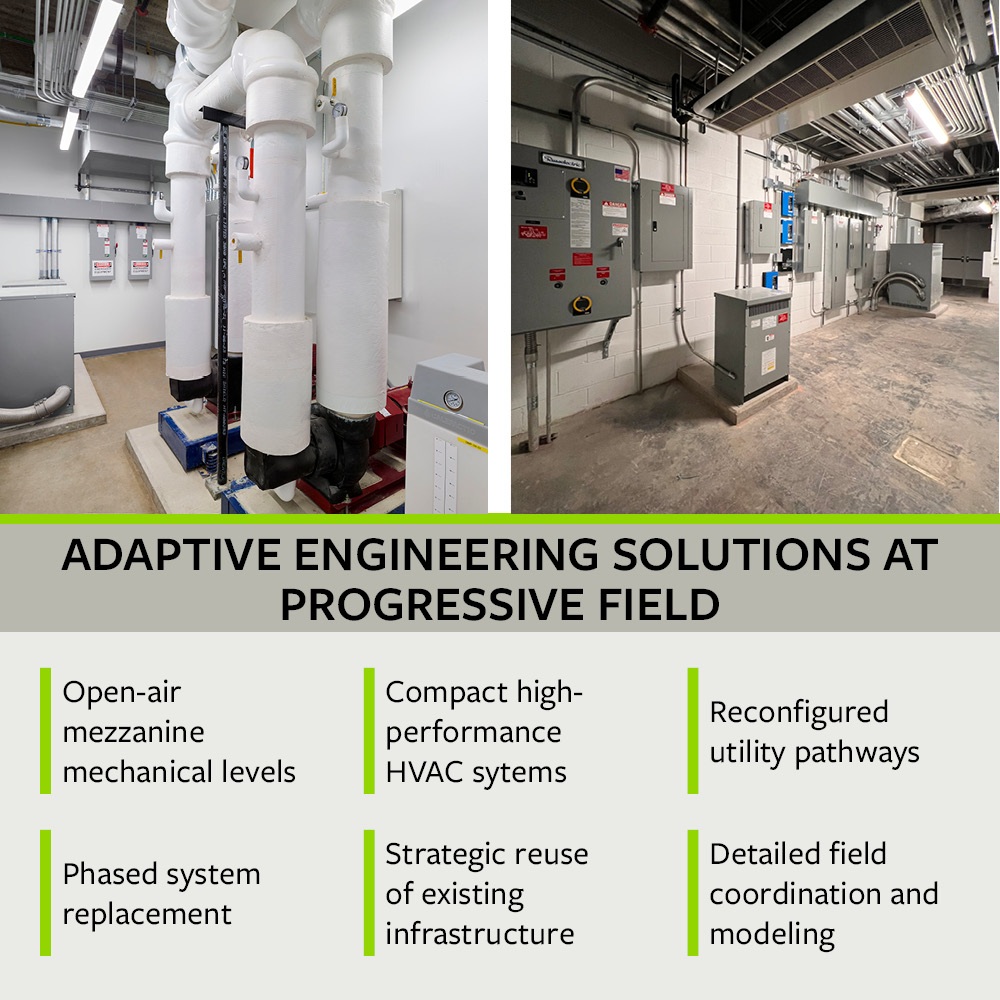
At Progressive Field, engineering teams needed to integrate modern infrastructure into spaces originally designed for much smaller operational demands. Expanded kitchen and commissary operations, advanced broadcast technology, hydrotherapy areas, premium hospitality spaces, and upgraded player wellness facilities all required increased electrical capacity, ventilation, cooling, and plumbing infrastructure.
The East 9th Street Building alone introduced a new four-story facility housing commissaries, kitchens, hospitality areas, and expanded clubhouse spaces. Engineers identified spare capacity within an existing medium-voltage switchboard and implemented a new bolted pressure switch solution to avoid long equipment lead times while supporting increased electrical demand.
For architects, projects like this reinforce the importance of early engineering coordination. Infrastructure decisions now directly influence spatial planning, ceiling coordination, occupant comfort, acoustics, and long-term adaptability.

Playing in the Tight Corners: Designing Within Existing Constraints
One of the defining challenges of modernization is working within severe physical constraints.
At Progressive Field, the original hydraulic slab foundation limited below-grade utility routing and reduced floor-to-floor clearances for new infrastructure. Mechanical and electrical upgrades needed to fit within service spaces originally designed for much smaller operational demands.
The Terrace Club renovations required upgraded electrical infrastructure and new HVAC systems to support multiple kitchens and dining areas within extremely limited ceiling heights. In the Clubhouses, new hydrotherapy pools and player wellness spaces required additional drainage capacity, leading to the implementation of a pedestal-mounted grout-less tile system that allowed utilities to route beneath the floor while minimizing underground work.
The result is a reminder that the most important engineering solutions in adaptive reuse projects are often the least visible.
The Critical Role of Sequencing & Coordination
Stadium renovations are shaped as much by schedule as design. Unlike new construction, work often must fit within compressed off-season windows tied to sports calendars, event programming, and operational needs.
At Progressive Field, renovations were carefully phased so critical infrastructure systems remained operational and were ready before each MLB season. Post-pandemic supply chain disruptions and extended equipment lead times added further complexity, requiring engineers and contractors to evaluate alternatives, adjust layouts, and keep work moving.
For owners, the lesson is clear: successful modernization requires partners who can coordinate across disciplines, adapt quickly, and protect schedule, operations, and long-term performance.
Sustainability Through Preservation
One of the most important yet often overlooked aspects of stadium modernization is sustainability.
Instead of demolishing and rebuilding, the Progressive Field renovations extended the life of the existing facility while improving energy management, operational efficiency, system reliability, and long-term maintainability. Existing infrastructure was reused where possible, reducing waste while positioning the ballpark for future growth.
As owners and municipalities continue balancing sustainability goals with financial realities, modernization projects increasingly offer a more resilient and cost-effective path forward.
Preserving Identity While Building for the Future
Perhaps the most significant takeaway from Progressive Field is that modernization does not require sacrificing identity.
The renovation preserved the ballpark’s role as a civic landmark while transforming its operational capabilities for the next generation of fans, athletes, and staff. This balance between preservation and innovation is becoming one of the defining opportunities in sports venue design.
For architects and clients, the future of sports venue design may not be defined by entirely new stadiums, but by how intelligently we adapt venues that already exist. The facilities that remain successful for decades to come will be the ones engineered not just to perform today, but to evolve for the future.