MEP Engineering Strategies for Modern Library Design
By Matt Murphy and Heather Todd and Dave Woytek | Apr 13, 2026
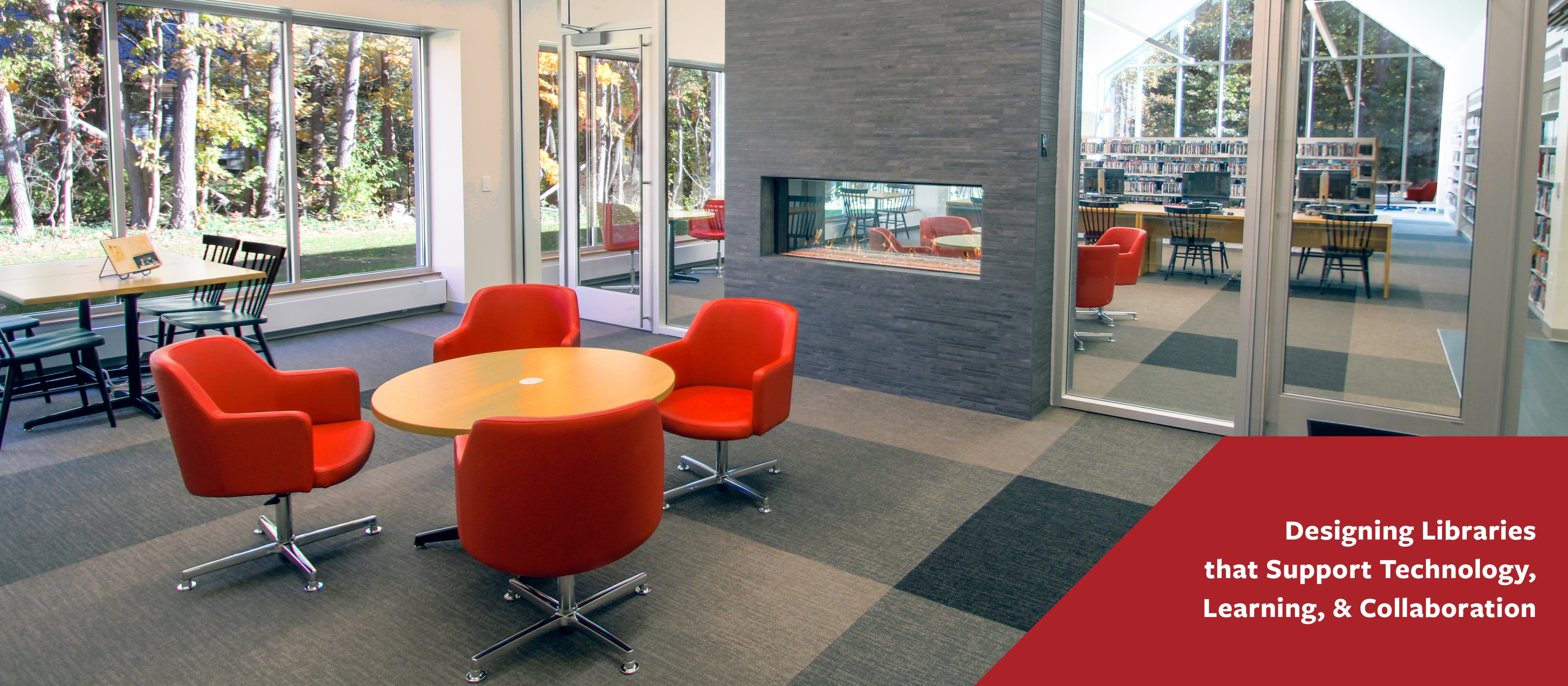
Public libraries are undergoing one of the most significant transformations in their history. Once defined primarily by collections of books and quiet reading rooms, today’s libraries serve as dynamic civic hubs – places for collaboration, learning, access to technology, and community gathering.
For architects and engineers, this shift changes how these buildings are designed. Engineering systems are supporting spaces that are flexible, technology-rich, comfortable, and welcoming, all while operating within tight public budgets.
Achieving that balance requires an integrated approach between architecture and engineering from the earliest stages of design.
Libraries as Community Anchors
Modern libraries function less like traditional storehouses and more like community centers, including new spaces such as:
- Community meeting spaces
- Computer and technology labs
- Gaming areas and teen spaces
- Makerspaces and podcast studios
- Flexible study and collaboration areas
As a result, the environment needs to support a wider range of activities and occupancies throughout the day. The design challenge is no longer just accommodating book stacks, it’s creating adaptable infrastructure that allows spaces to evolve over time. This means designing systems that support flexibility without sacrificing comfort, efficiency, or acoustic performance.

Engineering for Comfort, Flexibility, and Performance
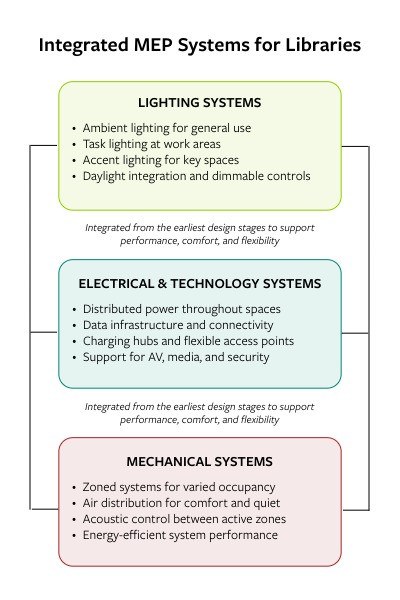
Library design now demands an integrated approach to engineering, one where mechanical, electrical, and lighting systems work together to support both performance and user experience. As libraries continue to evolve, systems are designed to quietly enable a wide range of activities while remaining efficient and unobtrusive.
Mechanical systems should balance comfort, acoustics, and energy efficiency in spaces with highly variable occupancy. Maintaining consistent thermal comfort without introducing disruptive noise is critical across spaces ranging from quiet reading rooms to active collaboration zones. Strategies such as zoned systems and, in some cases, underfloor air distribution help deliver conditioned air more effectively while supporting
Electrical infrastructure plays a central role in supporting new technology-driven library environments with spaces supporting:
- Public computer stations
- Charging hubs for personal devices
- Podcast studios and media labs
- Self-service kiosks and digital catalog systems
- Data infrastructure for security and building systems
With these new technologies in mind, power and data are distributed throughout the building rather than concentrated in a few locations. Flexible power solutions, integrated receptacles, and planning for future capacity allow libraries to adapt as design and technology continue to develop. At the same time, resiliency remains a priority, with backup power systems supporting critical operations and ensuring continuity during outages.
Lighting design ties these systems together by supporting both function and atmosphere. Rather than relying on uniform lighting levels throughout the building, a layered lighting strategy combines:
- Ambient lighting for general illumination
- Task lighting at tables and work areas
- Accent lighting to highlight architectural features or key spaces
LED technology and advanced controls enable reduced energy use, allowing lighting loads to decrease while improving lighting quality and control. Daylight integrations are another important design element, pairing natural light with controlled lighting systems and dimmable fixtures that allow for comfortable lighting conditions throughout the day. Careful coordination with architectural elements and furniture layouts ensures that lighting enhances the space without creating glare, shadows, or visual discomfort.
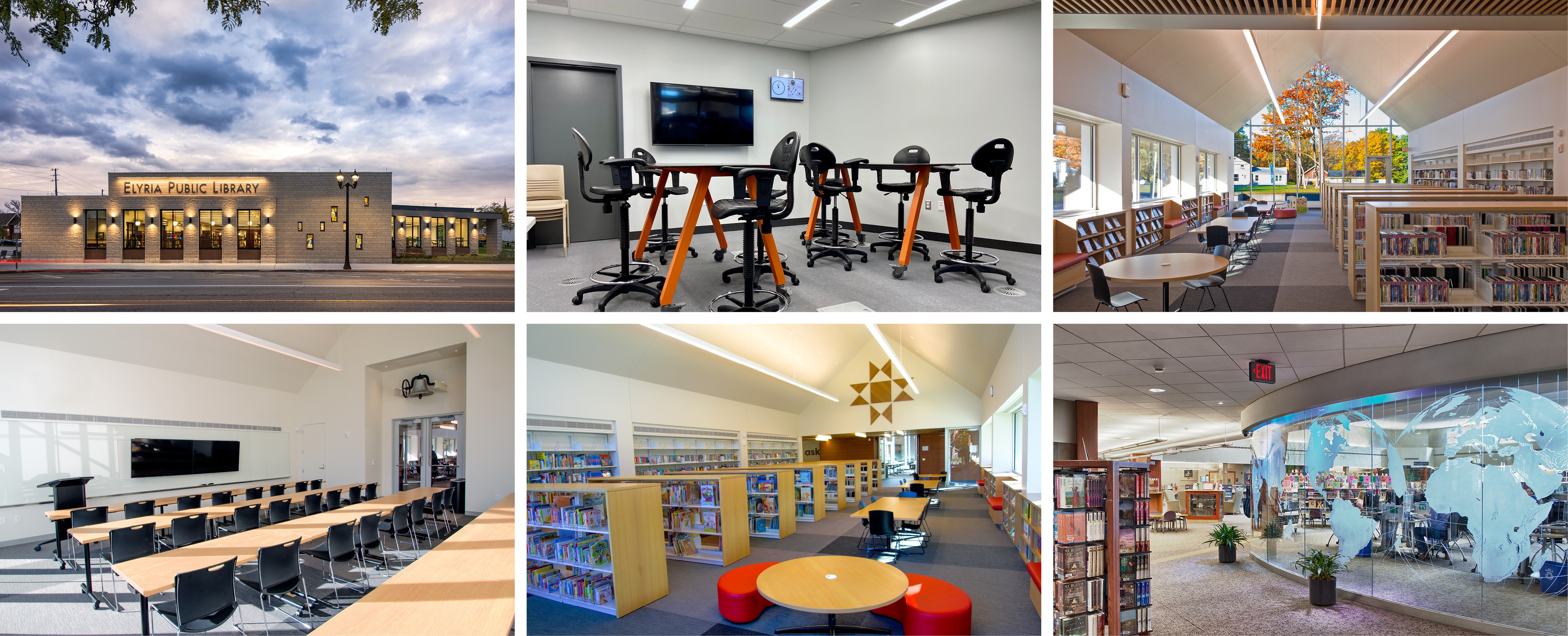
Designing Future-Ready Library Spaces
Because technology advances rapidly, engineers should focus on future-ready infrastructure, including:
- Distributed electrical capacity
- Flexible lighting zones and controls
- Mechanical systems that can respond to changing occupancy patterns
Designing for flexibility ensures that spaces can grow alongside changing technologies and community needs, while smart infrastructure planning supports long-term performance without constant reinvestment. At the same time, public funding realities call for efficient, cost-conscious solutions that don’t compromise quality or user experience.
Ultimately, the most successful library projects emerge from strong collaboration between architects, engineers, and library stakeholders. When these disciplines work together early in the design process, libraries can achieve something powerful: buildings that are both technically sophisticated and deeply welcoming to the communities they serve.